
From Ocean Expeditions to the Big ScreenDraken and The Odyssey
A real ship at the heart of an epic
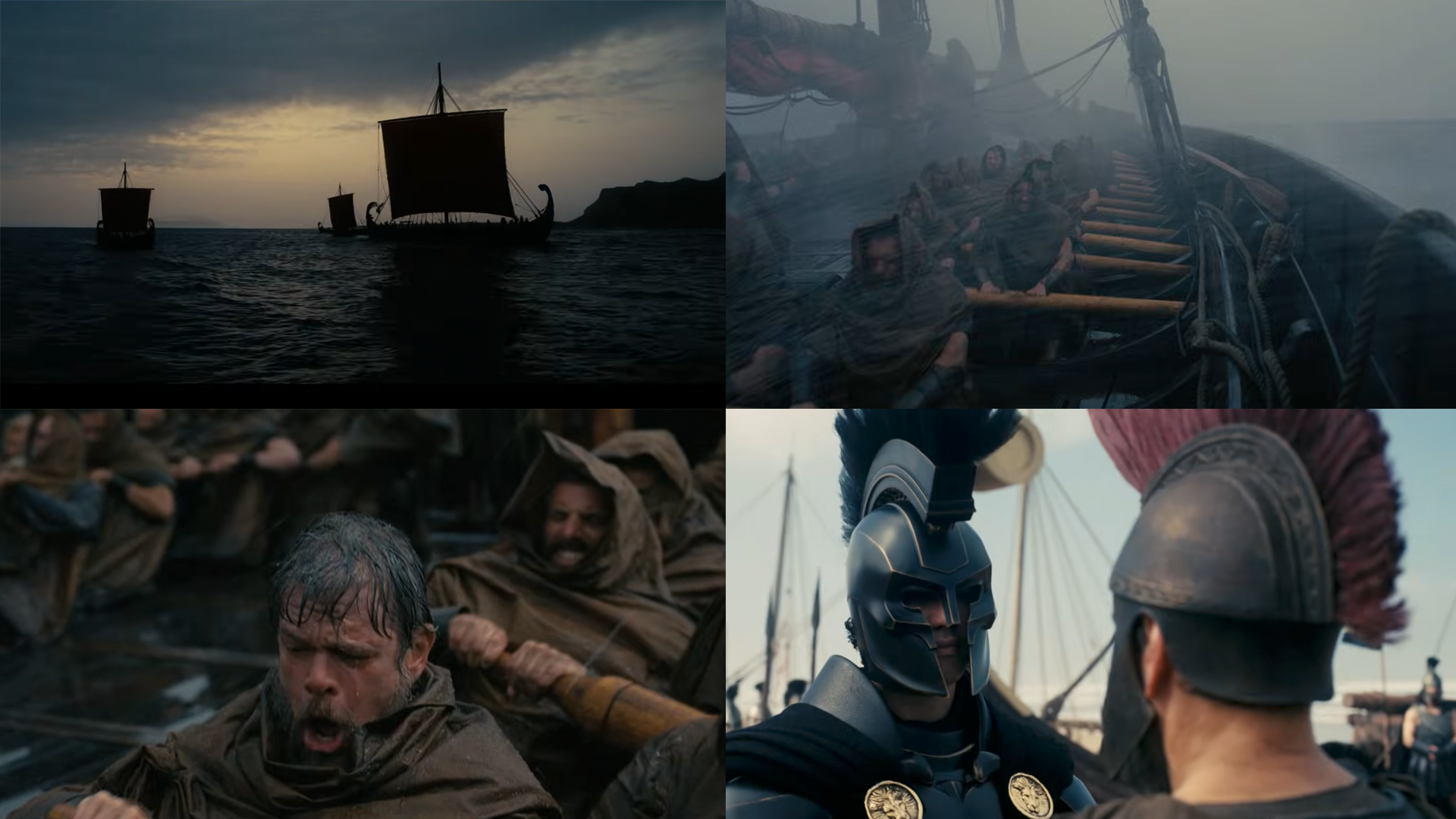
In Christopher Nolan's The Odyssey (2026), Draken Harald Hårfagre portrays the ship of Odysseus, bringing the extraordinary presence of a real, ocean-going Viking ship to the big screen.
Built for exploration and experimental archaeology, Draken brought something exceptional to the production: a full-scale wooden ship shaped by traditional craftsmanship, operated by experienced sailors and tested through real ocean voyages.
The collaboration brought together the worlds of maritime exploration and cinematic storytelling, demonstrating the power of authentic craftsmanship, human ingenuity and real experience in modern filmmaking.
Watch the official trailersThe Power of a Real ShipDraken brought something extraordinary to The Odyssey: the physical presence of a real, ocean-going wooden ship, built through traditional craftsmanship and tested during years of challenging expeditions.
Her oak hull, towering mast, rigging, and sail are not simply elements of a film set. They belong to a working vessel, shaped by the forces of wind and sea. This authenticity brings a sense of scale, movement and physical reality that is difficult to replicate artificially.
Although Homer's Odyssey takes place long before the Viking Age, Draken's contribution was not one of exact historical reconstruction, but of genuine maritime craftsmanship and seamanship — bringing the power and presence of a real ship to one of cinema's great epic stories.
A Ship That Became a Character“It became a character in the movie.”
For director Christopher Nolan, filming aboard Draken offered something a soundstage could not. The ship's real movements, the challenges of working at sea and the experience of her crew became part of the filmmaking process itself.
The People Behind the ShipDraken's contribution to The Odyssey extended far beyond the vessel itself. Members of her international crew participated in the production, bringing years of practical experience in traditional seamanship, rowing, and sailing aboard the ship.
Operating Draken requires coordination, trust and an intimate understanding of the vessel. These are skills developed through real expeditions and countless hours at sea, and they became part of the human experience captured on screen.
For the Draken project, this collaboration represents something particularly meaningful: the knowledge and craftsmanship preserved through years of exploration found a new expression through cinematic storytelling, reaching audiences far beyond the ship's usual horizons.
About the filmWritten and directed by Christopher Nolan, The Odyssey (2026) is an epic adventure based on Homer's ancient Greek poem. Starring Matt Damon as Odysseus, the film follows the legendary hero's perilous journey home after the Trojan War, encountering mythical creatures, powerful gods, and extraordinary challenges along the way.
Produced by Syncopy and released by Universal Pictures on July 17, 2026, The Odyssey became the first feature film shot entirely with IMAX film cameras. The production went on to become the highest-grossing film in Universal Pictures' history, surpassing $1.7 billion at the worldwide box office and establishing a new milestone for the studio.
The Real Voyage ContinuesFor Draken Harald Hårfagre, The Odyssey represents an extraordinary chapter in a much larger story. Built to explore the capabilities of Viking Age ships, Draken continues her journey as a working vessel and a platform for exploration, experimental archaeology and international collaboration.
During the film's release in 2026, Draken welcomed nearly 3,000 visitors aboard in Oslo, offering the public an opportunity to experience firsthand the ship, craftsmanship and seamanship behind her remarkable cinematic appearance.
Beyond Hollywood, Draken continues to explore new horizons through expeditions, education and public engagement — preserving maritime knowledge, inspiring curiosity and demonstrating what human ingenuity and determination can achieve.
The story is still being written.
Explore moreTo learn more about the wider purpose behind the Draken project, visit Mission & Story. To explore Draken’s broader screen presence, visit Film & Television.